


Virtual reality experience apps are shaking up the way people explore, learn, and play. Imagine diving into a world where you can travel to ancient Rome or swim with dolphins without ever leaving your living room. It’s like having a magic portal right in your pocket, minus the risk of stepping on a cat or tripping over a coffee table.
Overview of VR Experience Apps
VR experience apps revolutionize how individuals engage with digital content. These applications provide immersive experiences across various fields, including education, health care, and entertainment. Users can dive into historical settings or explore new worlds, all while using portable devices.
Numerous options exist, offering a spectrum of experiences tailored to diverse interests. Educational apps allow students to step inside a cell or visit a historical site, enhancing retention through direct interaction. Health care apps support therapy, helping patients confront phobias or manage pain through playful environments.
The entertainment sector includes games and social interaction platforms. Users can play collaboratively in virtual spaces, increasing social connectivity. Platforms such as Oculus and Steam emphasize a wide variety of applications, making the VR experience accessible to many.
Accessibility remains vital. Many VR experience apps are designed for use on mobile devices, while others require sophisticated headsets. Such diversity allows flexibility for casual users and serious gamers alike.
Overall, VR experience apps effectively break traditional barriers. Users can find themselves traversing landscapes or engaging with interactive narratives from the safety of their homes. Increasingly, these applications contribute to various industries, adapting to meet user needs and preferences.
Popular VR Experience Apps
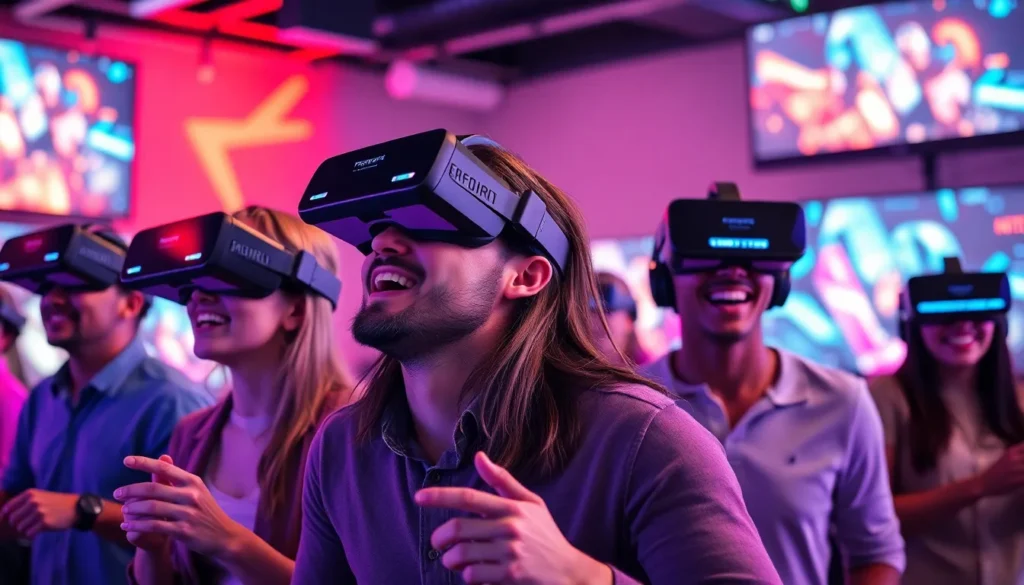
Numerous VR experience apps enhance exploration and engagement in various domains. The following categories highlight some of the most popular apps available today.
Immersive Gaming Apps
Immersive gaming apps provide adrenaline-pumping experiences. Titles like Beat Saber and Half-Life: Alyx showcase active participation and skill challenges. Engaging in multiplayer games fosters social interaction, connecting players globally. Platforms such as PlayStation VR and Oculus Quest support a variety of genres, from action to puzzle-solving. Frequent updates and new releases keep gameplay fresh and exciting, drawing both casual gamers and enthusiasts alike.
Educational VR Apps
Educational VR apps revolutionize learning methods. Apps like Google Expeditions and Engage allow users to explore subjects from history to biology in vivid detail. Interactive environments enhance comprehension and retention of information, making complicated topics more accessible. Students benefit from real-time experience, bringing lessons to life as they visit landmarks or immerse themselves in simulations. Educators integrate these applications to enrich the curriculum, catering to diverse learning styles while engaging students effectively.
Features of VR Experience Apps
VR experience apps incorporate unique features that enhance user interactions and overall immersion. These elements contribute to the effectiveness and appeal of the applications.
User Interface Design
User interface design prioritizes simplicity and intuitiveness. Clean layouts enable users to navigate effortlessly. Visual cues guide actions, making interactions seamless. Designers often utilize large buttons to accommodate users wearing VR headsets. Furthermore, consistent color schemes establish a cohesive experience. Users feel less disoriented when transitioning between tasks. Engaging graphics also enhance the visual experience, making environments feel more realistic. Designers focus on minimizing motion sickness by optimizing animations and responsiveness.
Interactivity and Engagement
Interactivity and engagement stand as key pillars of VR apps. Users actively participate rather than observe, fostering deeper connections. Many applications feature branching narratives that adapt based on choices, making experiences feel personalized. Additionally, haptic feedback creates tactile sensations, enhancing immersion. Users enjoy being part of the action, whether in gaming or educational scenarios. Collaborative options also facilitate social interaction, allowing friends to explore together. Environments often include interactive objects, encouraging exploration and discovery. Overall, interactivity not only enriches experiences but keeps users coming back for more.
Benefits of VR Experience Apps
VR experience apps offer numerous advantages that enhance various aspects of life, from education to social connectivity.
Enhanced Learning Opportunities
VR experience apps transform education by providing interactive environments. Students can explore historical sites, participate in anatomy lessons, or engage in language immersion. Immersive tools, such as Google Expeditions, allow learners to visualize complex subjects with clarity, leading to improved understanding and retention. Realistic simulations also create a safe space for practicing skills, particularly in fields like medicine and engineering. By fostering active engagement, these applications promote inquiry and curiosity among users.
Social Interaction and Community Building
VR experience apps enable users to connect and collaborate in engaging ways. Multiplayer features in games like Rec Room facilitate social interactions, allowing friends to gather in virtual spaces. Users can share experiences, attend events, and form communities around shared interests. This social aspect enhances the sense of belonging, crucial for emotional well-being. Gamers and learners alike find that these connections enhance engagement, fostering a sense of togetherness while exploring new environments.
Challenges of VR Experience Apps
VR experience apps face several challenges that limit their potential. Hardware limitations significantly impact user experience. Many users do not possess high-performance devices required for a smooth experience. Inadequate processing power or resolution can lead to lag and discomfort, reducing immersion.
Content accessibility presents another hurdle. Not everyone can find or afford suitable applications. Developers often prioritize popular themes and experiences, neglecting niche topics that could engage specific audiences. Language barriers can also restrict content reach, as many apps only support a limited number of languages. Furthermore, users may struggle with app compatibility across various devices, making it difficult to fully engage with the VR experience. Overcoming these challenges requires innovation and a focus on inclusivity, ensuring broader access to VR technology and content for diverse users.
The world of VR experience apps continues to expand and innovate, offering users unparalleled opportunities for exploration and learning. These applications not only enhance entertainment but also create meaningful connections and foster educational growth. As technology advances, the potential for VR to reshape how individuals interact with content is immense.
Addressing the current challenges will be crucial for developers aiming to make VR accessible to all. By focusing on inclusivity and improving compatibility, the industry can ensure that a wider audience enjoys these transformative experiences. As VR technology evolves, it promises to unlock even more possibilities, making immersive adventures a staple in everyday life.