


Imagine stepping into your dream home without ever leaving your couch. With VR real estate apps, that fantasy is now a reality. These innovative tools are revolutionizing the way people buy and sell properties, making house hunting feel more like an adventure in a video game than a chore. Who needs to brave the traffic and awkward small talk with agents when you can don a headset and explore homes in stunning detail?
Overview of VR Real Estate Apps
VR real estate apps provide immersive property experiences to users, allowing them to visualize homes without stepping outside. Numerous platforms offer 3D tours, enhancing the home viewing experience. Features include 360-degree views, interactive floor plans, and personalized staging options. These tools cater to both buyers and sellers, streamlining the process significantly.
Technology advancements enable higher realism in property simulations. Environments are designed to showcase different styles and settings, helping potential buyers envision their future homes. These applications often integrate features such as virtual staging, where furniture and décor are digitally placed in the space. By doing this, users gain a better understanding of how spaces can be utilized.
Performance data indicates that properties showcased through VR apps tend to sell faster and at higher prices. Statistics show that listings with virtual tours receive 87% more views than traditional listings. This increase in engagement illustrates the effectiveness of VR technology in real estate marketing.
Accessibility remains a key benefit of using VR real estate apps. Users can explore multiple properties in a single session without geographical limitations. Agents benefit from this technology too, as they can engage clients anytime and anywhere.
Incorporating VR into real estate strategies reflects a significant shift in how properties are marketed. Virtual experiences simplify decision-making for buyers and increase competitive advantages for sellers. Ultimately, these apps transform the entire real estate landscape.
Benefits of VR Real Estate Apps
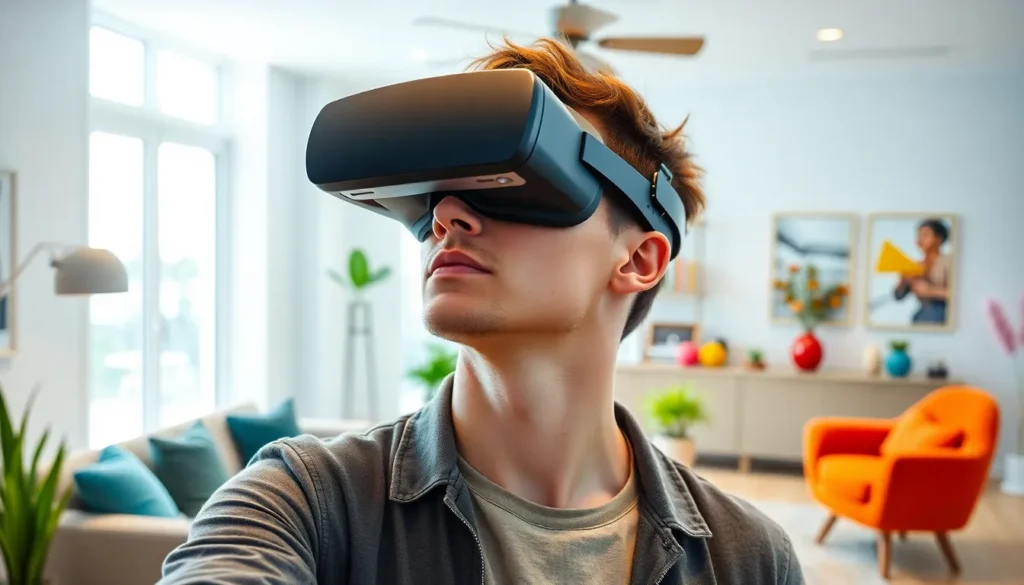
VR real estate apps offer significant advantages for both buyers and sellers. These tools enhance property exploration and create an engaging buying experience.
Enhanced Property Visualization
Enhanced property visualization transforms how potential buyers view listings. 3D tours and 360-degree views allow individuals to immerse themselves in properties without being physically present. Features such as interactive floor plans enable a detailed understanding of layout and space. Buyers can envision different decoration styles by personalizing staging options. Statistics show properties presented through VR sell faster and at higher prices, highlighting the effectiveness of immersive experiences. Virtual tours can generate 87% more views, leading to increased interest and informed decision-making.
Increased Engagement for Buyers
Increased engagement for buyers results from the interactive nature of VR applications. Users can explore numerous properties from their own homes, which saves time and reduces stress. Each app’s engaging features mimic a gaming experience, capturing attention and making the exploration process enjoyable. Buyers often feel more connected to properties viewed through VR, as they can navigate spaces intuitively. Ultimately, this higher engagement level complements the marketing strategies of sellers, creating a win-win situation in the competitive real estate market.
Key Features to Look for in VR Real Estate Apps
Choosing the right VR real estate app entails understanding specific features that enhance the user experience and property engagement.
User-Friendly Interface
A user-friendly interface simplifies navigation through properties. Users should find clear menus and intuitive controls that guide them effortlessly. Accessibility increases when apps support various devices, allowing for seamless transitions between smartphones, tablets, and VR headsets. Simple layout designs help users focus on properties without distractions. Effective onboarding processes can familiarize new users with features quickly. Feedback mechanisms enable users to report issues, improving overall functionality.
High-Quality Graphics and Rendering
High-quality graphics and rendering play a pivotal role in creating immersive experiences. Realistic visuals significantly enhance how users perceive property details. Users appreciate clear textures and accurate light simulations that mimic real-world environments. Advanced rendering techniques provide fluid animations, making walkthroughs feel lifelike. Detailed visual representations aid in highlighting property features, increasing buyer interest. Quality graphics also contribute to a seller’s ability to present homes attractively, ensuring listings stand out in a competitive market.
Popular VR Real Estate Apps on the Market
Several VR real estate apps have gained popularity for their innovative features that enhance property viewing experiences.
App 1: Description and Features
Matterport stands out for its ability to create meticulously detailed 3D property models. Users navigate interactive floor plans while exploring spaces from various angles. High-resolution images ensure properties appear vibrant and lifelike. Matterport also provides tools for easy sharing, enabling agents to showcase listings effectively on various platforms. Listings with Matterport virtual tours typically experience 87% more views compared to standard listings. This app is essential for agents looking to elevate their marketing strategies and attract more potential buyers.
App 2: Description and Features
Zillow 3D Home takes virtual tours to another level with its user-friendly approach. Potential buyers can explore homes through immersive 360-degree views paired with vibrant visuals. The app allows users to create and publish their tours, making it easy for sellers to showcase their properties. Integration with the Zillow platform enhances visibility and connects listings to a broader audience. Zillow 3D Home offers an intuitive navigation experience, ensuring users can effortlessly explore various property features in detail. This app is ideal for real estate professionals aiming to streamline their marketing efforts and reach more buyers.
Future Trends in VR Real Estate Apps
Emerging technologies are shaping the future of VR real estate apps significantly. Enhanced artificial intelligence integration personalizes user experiences, offering tailored property recommendations based on preferences. High-quality virtual reality headsets benefit buyers by providing an immersive viewing experience and allowing deeper engagement with listings.
Increased mobile compatibility also drives the adoption of VR applications in real estate. Users can access 3D tours and floor plans seamlessly, whether at home or on the go, improving convenience and engagement. Enhanced social sharing features allow users to collaborate with friends and family during house-hunting, enriching the decision-making process.
Data analytics capabilities are evolving to provide real-time insights into buyer behavior. This information helps real estate professionals optimize marketing strategies and increase property visibility. Additionally, advancements in virtual staging technology create realistic depictions of spaces, enabling buyers to envision potential homes more clearly.
Marketplace dynamics shift towards a more competitive landscape as VR apps gain popularity. Increased focus on user experience ensures intuitive interfaces and easy navigation for buyers. Property visualization will continue to become more realistic, with improvements in graphics rendering captivating user attention.
Integration with blockchain technology may reshape transactions in real estate. Secure, decentralized transactions can streamline buying and selling processes, reassuring both parties. As the market continues to evolve, these trends will play a significant role in maintaining the competitive edge of VR real estate apps.
The rise of VR real estate apps marks a significant evolution in how properties are marketed and explored. These tools not only enhance the buying experience but also empower sellers to showcase their listings more effectively. As technology continues to advance, the integration of AI and improved visualizations will further enrich user experiences.
With features that promote engagement and accessibility, VR apps are reshaping the real estate landscape. They provide a competitive advantage for sellers while simplifying the decision-making process for buyers. As the industry embraces these innovations, the future of property transactions looks more interactive and efficient than ever.